

New REVIEW Highlights: Strategies to Reduce Clotting in Small-Diameter Vascular Grafts
Researchers from Instituto de Investigação e Inovação em Saúde (i3S), Medical University of Vienna (MUW), and Maastricht University have teamed up in a multidisciplinary collaboration to publish a comprehensive review in Acta Biomaterialia. The article provides an in-depth overview of current passive surface strategies for engineering antithrombogenic surfaces in synthetic small-diameter vascular grafts, a critical need for improving outcomes in bypass surgeries, including coronary and peripheral artery revascularization.
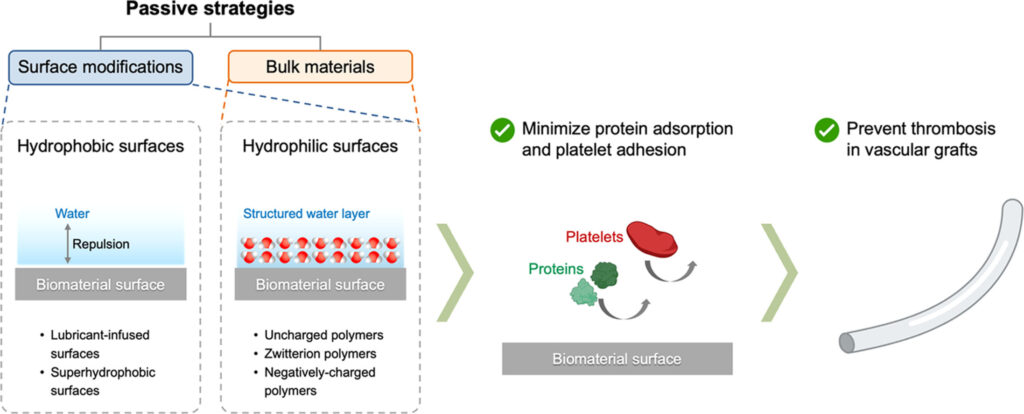
Synthetic small-diameter grafts frequently fail due to early thrombosis, limiting their clinical use and increasing reliance on autologous vessels, which are often unavailable or unsuitable. This review critically analyzes surface modification approaches applied to clinically established materials or compliant materials under research, as well as emerging intrinsically antithrombogenic materials, linking surface physicochemical properties to protein adsorption and platelet activation.
By systematically examining availablein vitro and in vivo evidence, the authors highlight how passive surface strategies, designed to reduce protein adsorption and platelet activation (the first steps in thrombus formation), can improve hemocompatibility without relying on the release of drugs or bioactive agents. Ferreira et al. emphasize that these passive approaches remain attractive due to their simplicity and stability.
Why it matters?
Improving the hemocompatibility of synthetic vascular grafts could significantly expand treatment options for patients with cardiovascular disease, reduce dependence on autologous vessels, and improve long-term graft patency.
Authors: Helena P. Ferreira, Lorenzo Moroni, Helga Bergmeister, and Inês C. Gonçalves.
The article, titled “Engineering Antithrombogenic Surfaces in Synthetic Small-Diameter Vascular Grafts: A Review of Passive Strategies”, is available open access in Acta Biomaterialia at https://doi.org/10.1016/j.actbio.2025.10.038.
Deixe um comentário